
7 reasons automation is the solution to 47-day certificate lifespans
In a world where digital certificates require monthly renewal, managing these deadlines across your organization will become nearly impossible. Learn the 7 reasons Sectigo believes automation is the only way forward, and how adopting an automated platform will save your business time, money, and risk in the long run.
Table of contents
Avoid costly outages and security breaches
Eliminate human error and manual overhead
Ensure business continuity even during absences
Improve security through frequent validation
Achieve crypto-agility and prepare for quantum threats
Centralize visibility and control
Reduce operational costs and increase efficiency
Conclusion: Automation is the only path forward

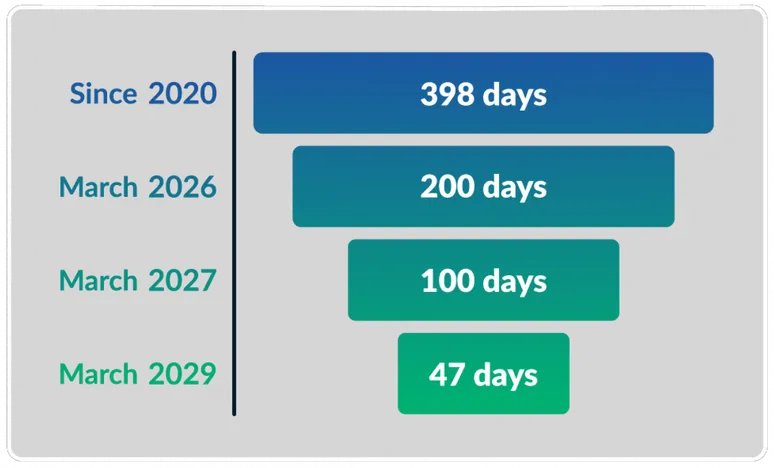
The digital certificate landscape is undergoing a major transformation. With Apple’s 47-day maximum lifespan for public TLS/SSL certificates ballot now passed, and other browser giants like Google backing the move, organizations must prepare for a future of short-lived certificates. Currently, the maximum certificate lifespan is 398 days.
The first stepdown for this 47-day change is happening in less than a year, on March 15, 2026. When this date rolls around, digital certificates will be required to have, at maximum, 200-day lifespans, requiring renewal 2x per year.
Manual certificate management won’t survive in this new reality. Automation is no longer optional, it’s essential. Below are the 7 key benefits of automating certificate lifecycle management (CLM) in preparation for 47-day certificate lifespans.
Avoid costly outages and security breaches
Expired certificates can cause service outages, trigger browser warnings, and leave systems vulnerable to attack. Under a 47-day lifespan, certificates must be renewed roughly every month, creating enormous pressure on IT teams.
Automation ensures certificates are renewed on time, every time, eliminating the risk of:
- Revenue-impacting outages
- Data breaches due to expired certificates
- Reputational damage from browser warnings like “Your connection is not private”
Eliminate human error and manual overhead
Manual processes are inherently error-prone and time-consuming. They require constant vigilance to avoid missed renewals, misconfigurations, or insecure deployments.
Automated CLM solutions streamline the entire process by:
- Issuing, renewing, and revoking certificates automatically
- Monitoring certificate status in real-time
- Reducing staff workload and reliance on spreadsheets or calendar reminders
Ensure business continuity even during absences
Short certificate lifespans mean no room for delay, even during holidays or staff leave. Automation enables “set it and forget it” functionality that keeps your digital operations secure and uninterrupted.
You’ll no longer have to worry about:
- Critical personnel being unavailable during renewal windows
- Last-minute scrambles due to human resource constraints
- Gaps in coverage from employee turnover
Improve security through frequent validation
Short-lived certificates, when managed automatically, increase security by design. They:
- Reduce the window of opportunity for certificate compromise
- Force more frequent validation of cryptographic integrity
- Support agile response to evolving threats and vulnerabilities
By automating, you gain the security benefits of short certificates without the operational burden.
Achieve crypto-agility and prepare for quantum threats
Short certificate lifespans are a critical enabler of crypto-agility: the ability to quickly update cryptographic algorithms in response to emerging threats, including quantum computing.
Automated CLM supports:
- Swift rollout of quantum-resistant algorithms
- Seamless certificate replacement across complex environments
- Resilience against future cryptographic shifts
Centralize visibility and control
A well-crafted automation platform gives you a complete view of your certificate landscape, including:
- All certificates, both internal and public
- Expiration timelines
- Issuers and usage
This centralized visibility reduces the risk of unknown or rogue certificates, supports compliance efforts, and ensures full control over your cryptographic assets.
Reduce operational costs and increase efficiency
Manual management of certificates eats up valuable time and resources. As certificate volumes increase under a 47-day system, those costs multiply. Automation reduces overhead by:
- Streamlining processes across environments
- Minimizing downtime and disruptions
- Allowing IT teams to focus on strategic priorities
The ROI of automation becomes even clearer when managing hundreds or even thousands of short-lived certificates.
Conclusion: Automation is the only path forward
The shift to 47-day certificates is coming fast. Organizations that fail to automate will face a constant cycle of renewals, risking outages, breaches, and operational chaos.
Sectigo Certificate Manager (SCM) is designed to help organizations manage this transition with confidence. Whether you're managing 10 or 10,000 certificates, automation ensures your infrastructure stays secure, compliant, and resilient.
Start calculating the ROI of adopting SCM in a 47-day world with our 47-Day Impact Calculator, and see how automation pays off before the first certificate expires.
Need help getting started? Talk to our experts or schedule a demo to see how automation can protect your business in the age of 47-day certificates.